inquiry
Leave Your Message
0%

When you're thinking about sourcing low-calorie konjac noodles in 2026, it’s not just about comparing price tags, you know? The market is really booming with demand for healthier options—think gluten-free, plant-based, and low-energy foods. According to Grand View Research’s 2024 Konjac Market Analysis, food applications like noodles, snacks, and functional foods are leading the way in growth. IMARC Group also reports that the market's still on the up, thanks largely to people’s interest in weight management and products with clean labels.

But here’s the thing—pay attention to the details when sourcing. Ask your suppliers about the purity of glucomannan, viscosity levels, moisture limits, microbiological test results, and latest Certificates of Analysis. It’s also good to check if the noodles contain calcium hydroxide, starch, or any added fibers. Don’t just rely on a pouch saying “5 calories”—sometimes, the texture can turn out pretty disappointing after heating. It’s worth testing samples in boiling water, stir-frying, and even refrigerated to see how they hold up. Because honestly, the texture really tells you the real story.

Dr. Michael Greger, a well-known doctor and nutrition researcher, describes glucomannan as “a viscous fiber that expands in the stomach,” which makes sense when you think about its benefits. But just because the noodles are low-calorie doesn’t mean they’re a complete meal. So, ask your suppliers to be transparent—look at their nutrition labels, allergen controls, traceability records, and packaging specs. Certifications like ISO 22000 or BRCGS definitely help build confidence, but let’s be honest—they don’t guarantee eating quality on their own. The best approach? Compare at least three different factories. Don’t get fooled by glossy catalogs and shiny claims—they look perfect, but the actual product might not be.

In the end, being cautious and doing your homework makes all the difference when sourcing these noodles. Trust me, it’s worth the effort!
How to Source Low Calorie Konjac Noodles in 2026?

Define Low-Calorie Konjac Noodles and Their Main Varieties

How to Source Low Calorie Konjac Noodles in 2026?

Low-calorie konjac noodles are pasta-like foods made mainly from konjac glucomannan, water, and sometimes starch. Glucomannan is a soluble fiber that absorbs water and creates a springy texture. Their calories are usually low because the noodles contain substantial water and limited digestible carbohydrate. However, serving sizes can confuse buyers. Always compare nutrition panels using the same drained weight.

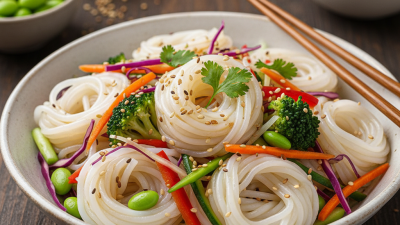
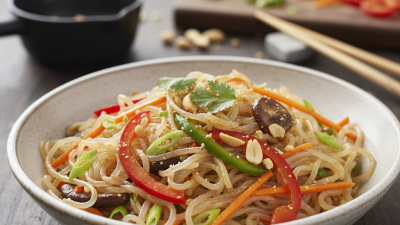
The main varieties include thin shirataki noodles, wide flat noodles, tofu-konjac noodles, and konjac rice. Thin noodles suit soups and stir-fries. Wide noodles hold thicker sauces better. Tofu-konjac versions often feel softer and provide additional protein. Konjac rice works in bowls, although its texture may seem rubbery beside ordinary rice. I once judged quality only by calorie count. That was too simple. Texture, odor, sodium, and ingredient stability matter during sourcing.

For reliable procurement, request the full ingredient specification, drained weight, moisture level, and recent laboratory test results. Check whether the product uses starch, seasoning, or oil, since these additions change its nutrition profile. In practical trials, rinse time affects odor and mouthfeel. A short boil can improve texture, but excessive heating may make noodles fragile. Suppliers should also provide allergen information, packaging details, shelf-life data, and documentation required in the destination market. Digestive tolerance varies, so clear serving guidance remains important.

Set Calorie, Ingredient, and Nutrition Requirements

When sourcing Low Calorie Noodles Konjac, set the calorie limit before contacting suppliers. A practical target is 15 kcal or less per 100 grams, measured after draining. Confirm the test method, because dry weight and drained weight can create misleading comparisons. USDA FoodData Central shows that preparation and serving definitions significantly affect reported nutrition values. Our first specification was too loose. We accepted “low calorie” claims without requesting laboratory evidence.

The ingredient sheet should list konjac flour or glucomannan clearly, plus water and processing agents. Reject formulas containing undeclared starch, sugar, or unnecessary flavoring carriers. Require a certificate of analysis for every production lot. Test moisture, glucomannan content, calories, carbohydrates, fiber, and sodium. The U.S. Food and Drug Administration permits specific glucomannan health claims only under defined intake conditions, including 4 grams daily and adequate water. Do not turn that rule into a casual marketing promise.

Keep the nutrition panel simple. Set sodium below 200 milligrams per 100 grams drained, unless the product’s intended use requires otherwise. Verify calories through accredited laboratory testing, not supplier spreadsheets. The EFSA Journal has evaluated glucomannan’s physiological effects, while USDA data supports consistent nutrient reference checks. Ask for three recent batch reports, a retained sample, and cooking instructions using 200 milliliters of water. Texture matters. A noodle that collapses after two minutes may fail in real kitchens, even with perfect numbers. That detail deserves more attention.

Identify Reliable Konjac Noodle Suppliers and Manufacturers

How to Source Low Calorie Konjac Noodles in 2026?

Reliable sourcing begins with supplier verification, not attractive product photos. A 2024 Grand View Research estimate valued the global konjac market at approximately US$1.1 billion. Food applications remain a key growth area. This growth attracts experienced manufacturers and weaker intermediaries. Ask for factory registration, production capacity, HACCP or ISO 22000 certification, and recent third-party audit records. A dependable supplier should provide a complete specification sheet, including glucomannan content, moisture, pH, microbiological limits, and serving size.

For products such as Konjac Angel Hair Low Calorie Fat, verify nutrition claims through an independent laboratory. Request certificates of analysis for calories, carbohydrates, fat, and allergens. Compare wet weight with drained weight. The difference can be surprisingly large. Also inspect sample texture after five minutes in boiling water. It should remain firm without a rubbery smell. Check packaging seals, expiration testing, traceability codes, and the factory’s response time during a complaint. Delayed answers often reveal operational weakness.

Tips: Request three production samples from different batches. Confirm whether the listed calories include sauce or only noodles. Review the BRCGS Global Food Safety Standard data, which emphasizes documented hazard controls and supplier management. Do not rely on certification logos alone. I have found that small inconsistencies in labeling deserve careful review. A supplier may be legitimate, yet still lack stable seasonal capacity. That risk needs written production commitments.

How to Source Low Calorie Konjac Noodles in 2026? - Identify Reliable Konjac Noodle Suppliers and Manufacturers

Evaluation Dimension Recommended Sourcing Benchmark Why It Matters for Low-Calorie Konjac Noodles Documents or Tests to Request Supplier Qualification Signal
Calorie Profile Approximately 5–20 kcal per 100 g of ready-to-eat product is a common commercial target, depending on the formulation and drained weight. Konjac glucomannan contributes very little digestible energy, but sauces, starches, oils, and other ingredients can substantially increase total calories. Product specification, nutrition calculation, laboratory nutrition report, and finished-product label artwork. The declared calorie value is supported by a consistent formulation and an independent or accredited laboratory report.
Konjac Content The specification clearly states the percentage or weight range of konjac flour or glucomannan in the finished noodle. A transparent konjac content declaration makes it easier to compare products and confirm that the low-calorie claim is not based mainly on dilution with water. Formula sheet, ingredient statement, raw-material specification, and batch traceability records. The manufacturer can explain the difference between dry-matter composition and the drained ready-to-eat product.
Ingredient Simplicity A short ingredient list commonly includes water, konjac flour or glucomannan, and an approved setting or texturizing ingredient such as a calcium salt. Fewer ingredients simplify regulatory review, allergen assessment, clean-label positioning, and nutrition calculations. Full ingredient declaration, additive identification, allergen statement, and technical data sheets for processing aids. The supplier provides exact ingredient percentages or permitted ranges rather than only a marketing description.
Dietary Fibre The product may be naturally high in fibre, but the final claim must be calculated according to the destination market’s definition and threshold. Konjac glucomannan is a soluble dietary fibre. Fibre content and permitted health claims vary by jurisdiction and serving basis. Dietary-fibre test report, nutrition calculation, and market-specific claim substantiation. The supplier distinguishes between “contains fibre,” “high fibre,” and other regulated claims instead of using them interchangeably.
Texture and Cooking Performance Noodles should maintain shape after rinsing and brief heating, with controlled firmness, elasticity, and low breakage. Low-calorie products are often sold as meal replacements or pasta alternatives, so texture strongly affects repeat purchase and customer complaints. Texture profile, cooking-loss test, breakage rate, sensory evaluation sheet, and retained-sample results. Performance data are measured against a defined test method rather than described only with terms such as “premium texture.”
Odor Control The product should have a mild or neutral odor after draining and rinsing, without persistent alkaline or fishy notes. Konjac products can retain processing odors if rinsing, acidification, or packaging controls are inadequate. Sensory evaluation protocol, pH record, rinsing instructions, and consumer-use test results. The manufacturer provides clear preparation instructions and demonstrates stable odor performance across production batches.
pH and Processing Control pH should be controlled within a documented product-specific range; the acceptable range must be validated for taste, safety, and shelf life. pH affects texture, preservative performance, microbial stability, and consumer acceptability. There is no single universal pH target for every konjac noodle formula. Product specification, in-process pH records, finished-product pH results, and corrective-action records. The supplier controls pH by batch and can show how deviations are handled.
Food Safety System The facility operates a documented HACCP-based food-safety system and maintains current third-party certification where required by the buyer. Food-safety controls are essential for water-rich, ready-to-eat or heat-and-eat products with extended shelf life. HACCP plan, certification scope, recent audit report, sanitation records, pest-control records, and recall procedure. The certificate covers the actual production site and product category, not merely a trading or administrative office.
Microbiological Limits Finished products should meet the microbiological limits of the destination market and the agreed product specification. High-moisture noodles require effective control of total counts, yeast and mold, pathogens, and post-process contamination. Recent certificate of analysis, environmental-monitoring plan, pathogen testing policy, and shelf-life microbiology data. Testing frequency, sampling points, and acceptance criteria are defined before commercial production.
Shelf Life Shelf life is established through real-time or suitably justified validation under stated storage conditions; do not rely only on a fixed industry assumption. Water activity, pH, packaging, preservatives, heat treatment, and distribution temperature all influence stability. Shelf-life study, accelerated-study rationale where applicable, storage-condition specification, and end-of-life test results. The expiry period is supported by data from the same formulation and packaging format offered for purchase.
Packaging Integrity The package should be food-contact compliant, sealed consistently, and suitable for the product’s moisture and distribution conditions. Leaks, weak seals, or unsuitable films can cause spoilage, odor migration, product drying, or damage during transport. Packaging specification, food-contact declaration, seal-strength test, leak test, migration documentation, and transport simulation. The supplier validates the final packaging configuration rather than testing only the empty film.
Label and Claims Compliance Nutrition values, ingredient names, allergens, net quantity, storage instructions, date coding, and claims are adapted to the destination market. “Low calorie,” “zero calorie,” “keto,” “gluten-free,” and “high fibre” are regulated differently across markets and may require specific thresholds or evidence. Market-specific label review, nutrition panel, claim substantiation, allergen-control statement, and regulatory declaration. The supplier is willing to revise labels for the importing country instead of reusing one generic label globally.
Allergen and Cross-Contact Control The facility maintains a documented allergen list, segregation procedure, cleaning validation, and cross-contact risk assessment. Konjac itself is not one of the major allergens in many regulatory systems, but shared equipment or added ingredients may introduce allergen risks. Allergen matrix, cleaning validation, supplier declarations, shared-line assessment, and finished-product verification where appropriate. Allergen controls cover both incoming materials and the complete manufacturing process.
Raw-Material Traceability Each production lot can be traced from konjac flour and other ingredients through processing, packaging, and shipment. Traceability enables rapid investigation of quality issues, targeted recalls, and verification of consistent raw-material origin. Lot-code procedure, receiving records, batch records, supplier-approval program, and mock-recall results. A mock recall can identify affected lots and distribution points within the buyer’s required response time.
Production Capability Capacity is demonstrated for the required noodle shape, pack size, filling format, and annual volume, with documented minimum order quantities. A suitable supplier must be able to reproduce the approved formula at commercial scale without compromising calorie, texture, or microbiological targets. Production-line description, capacity plan, sample batch records, lead-time schedule, and quality-release procedure. Capacity figures are separated into theoretical maximum, normal monthly capacity, and committed available capacity.
Sample Approval Approve samples using a written specification covering drained weight, noodle dimensions, appearance, odor, texture, pH, microbiology, and nutrition. Visual approval alone cannot confirm that a low-calorie noodle will remain compliant and consistent after mass production. Signed golden sample, product specification, sensory scorecard, laboratory reports, and change-control agreement. The supplier agrees that formulation, processing, packaging, or raw-material changes require prior written approval.
Data note: Calorie, fibre, pH, shelf-life, microbiological, and capacity figures should be treated as product-specific qualification benchmarks. Final values must be verified against the selected formulation, production site, packaging format, and regulations in the destination market.

Compare Product Quality, Certifications, and Food Safety Standards

When sourcing low-calorie konjac noodles in 2026, inspect the product beyond its calorie claim. A reliable supplier should provide a clear ingredient list, glucomannan content, serving size, and preparation instructions. The noodles should have a clean appearance, consistent thickness, and mild smell after rinsing. Texture matters. Mushy strands often reveal poor processing or storage.

Ask for recent certificates, not scanned documents with unclear dates. HACCP and ISO 22000 systems can show structured food-safety controls, while recognized third-party certification adds credibility. For organic products, verify the certificate’s scope, covered facility, and valid production period. The phrase Konjac Spaghetti Low Calorie Pasta Organic should describe the actual product, not merely attract searches. Certification logos alone are not proof.

Request batch-specific laboratory reports for microbiological safety, heavy metals, allergens, and permitted additives. Check whether the testing laboratory is accredited and whether results match the shipped lot. Examine sealed pouches for swelling, leaks, damaged seams, or unusual liquid color. Traceability should connect each carton to production records and raw-material sources. I would also test a small shipment before placing a large order. One supplier looked excellent on paper, yet the noodles softened during cooking. That mistake taught me to compare samples under identical water, temperature, and timing conditions. Local labeling and import rules still require separate review.

Evaluate Pricing, Minimum Orders, Packaging, and Shipping Options

When sourcing low-calorie konjac noodles in 2026, compare landed cost rather than the factory quote alone. Ask suppliers to separate noodle price, pouch cost, export cartons, inspection fees, and freight. An attractive price can hide expensive ocean charges. Request pricing at several volumes, such as 100, 500, and 1,000 kilograms. Confirm whether quotes use EXW, FOB, or delivered terms. Keep every assumption in writing.

Minimum order quantities deserve careful attention. A low MOQ may suit a test launch, but it often carries higher unit pricing. Ask whether the MOQ applies per flavor, package size, or total order. Request samples before committing. Check texture after reheating, liquid weight, odor, and nutrition data. Lab reports should support calorie and ingredient claims. I have seen buyers trust a sample, then receive different noodles in bulk. Batch consistency needs written controls.

Packaging affects both cost and product quality. Compare retail pouches, foodservice bags, and carton strength. Ask for packaging dimensions and pallet details before booking transport. These measurements prevent unpleasant freight surprises. Confirm shelf life, storage temperature, and carton markings. For shipping, compare ocean, rail, air, and multimodal options. Ocean freight usually costs less, but delays can disrupt a launch. Build time for customs review and port congestion. My own quote comparisons were not perfect; I initially ignored destination handling fees. That mistake changed the real cost considerably.

Request Samples and Verify the Final Product Before Ordering

How to Source Low Calorie Konjac Noodles in 2026?

Requesting samples is more than a courtesy step. It is a practical quality check before discussing large orders. Ask suppliers for sealed samples from the intended production facility. Confirm the noodle shape, package size, ingredients, net weight, and shelf-life date. Request the latest specification sheet and laboratory test reports. These documents should match the actual sample, not an older product version.

Prepare a simple evaluation sheet for Low Calorie Shirataki Noodles. Record odor, color, firmness, aftertaste, draining time, and cooking performance. Rinse each sample under the same conditions. Then compare texture after five and ten minutes in hot water. A useful sample should remain pleasant, not rubbery or unusually fragile. Check the liquid inside the pouch for leakage, cloudiness, or an unusual smell. Texture matters.

Do not rely only on attractive packaging or a low quotation. Ask for a pre-production sample if the supplier changes ingredients, machinery, or packaging materials. Verify the final product again before ordering. The production sample should match the approved sample in weight, appearance, flavor, and seal strength. I have learned that small differences can become expensive complaints later. My own process is not perfect; tasting results can vary between evaluators. Use at least two reviewers and keep dated photos. Start small. Confirm every detail in writing.

Konjac Green Bean Noodles in Spicy, Hot Chicken & Sesame Flavors: Factory-Direct Cup Options from China

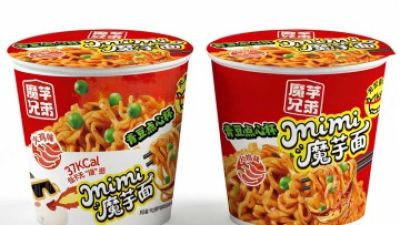
Konjac green bean noodles offer a convenient and satisfying instant snack in three flavorful choices: Spicy, Hot Chicken, and Sesame. Made with konjac and natural green bean ingredients, these noodles provide a light, high-fiber option for busy consumers seeking a more balanced alternative to traditional instant noodles. Each 90g cup is easy to prepare and suitable for offices, travel, retail shelves, and quick meals at home.

Produced in Shaanxi, China, the cups are available through factory-direct supply, helping distributors and retailers source consistent quality with flexible OEM/ODM support. The product has a nine-month shelf life and is supplied in cartons with a minimum order quantity of 300 cartons. With its convenient cup format, distinctive flavor range, and appealing low-calorie positioning, this instant snack can meet the needs of modern consumers while offering practical opportunities for customized packaging and market development.

FAQS

: What are low-calorie konjac noodles?

: They are pasta-like noodles made mainly from konjac fiber, water, and sometimes starch. They contain lots of water.

Which varieties are available?

Common varieties include thin noodles, wide noodles, tofu-konjac noodles, and konjac rice. Shapes affect cooking.

How should I compare calorie information?

Compare nutrition panels using the same drained weight. Serving sizes can create misleading differences. Drain them consistently.

What details should I request from a supplier?

Request ingredients, glucomannan content, drained weight, moisture level, shelf life, and preparation instructions. Ask for recent test reports.

Do added ingredients change the nutrition profile?

Yes. Starch, oil, seasoning, and sauces can increase calories, carbohydrates, or sodium. Check every ingredient. Do not trust calorie claims alone.

How can I assess noodle quality?

Look for consistent thickness, clean appearance, mild odor, and firm texture after rinsing. Mushy strands may indicate poor processing or storage. Texture is easy to overlook.

What food-safety documents should I review?

Review current food-safety certificates, facility details, allergen information, and batch-specific laboratory reports. Unclear dates are warning signs.

What should laboratory reports cover?

Reports should address microbiological safety, heavy metals, allergens, and permitted additives. Confirm the laboratory’s accreditation and shipped-lot details. The paperwork must match the cartons.

How should I test a new shipment?

Test a small shipment before ordering large quantities. Use identical water, temperature, rinsing, and cooking times. My earlier judgment was too simple.

How can preparation affect texture and odor?

Rinsing can reduce odor and improve mouthfeel. A short boil may help, while excessive heating can weaken the noodles. Do not overcook them.

Conclusion

Sourcing Low-Calorie Konjac Noodles in 2026 requires a clear understanding of the product’s varieties, ingredients, and nutritional profile. Buyers should first define acceptable calorie levels, konjac content, texture, flavor, additives, and dietary requirements. They can then identify reliable suppliers and manufacturers with consistent production capabilities, transparent documentation, and experience serving their target market. Comparing product quality, certifications, factory controls, traceability, and food safety standards is essential for reducing supply risks and ensuring regulatory compliance.

Cost evaluation should include unit pricing, minimum order quantities, packaging formats, customization options, lead times, and shipping arrangements. Before placing a large order, buyers should request samples from shortlisted suppliers and assess appearance, odor, texture, cooking performance, shelf stability, packaging integrity, and nutritional labeling. Laboratory or third-party testing may also help verify key specifications. A careful final review of the product, documentation, commercial terms, and delivery process can support a dependable and cost-effective purchase decision.
Emily

Emily

Emily is a highly skilled marketing professional with over a decade of experience in the konjac product industry. Her deep understanding of the market and its demands has allowed her to develop a diverse portfolio of konjac products, ranging from leisure snacks and instant foods to essential......
Previous 2026 Best Konjac Flour Suppliers for Global Buyers