86+09153618258
Leave Your Message
-
Contact Phone
-
 Contact Email
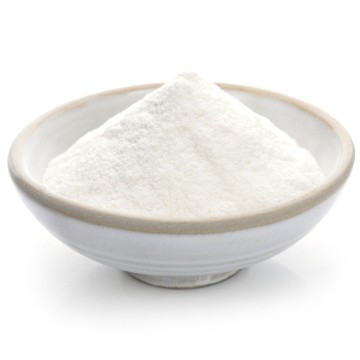
In the modern food processing landscape, the dairy sector is undergoing a massive paradigm shift. Consumers are increasingly demanding clean-label, low-fat, low-sugar, and plant-based dairy alternatives without wanting to compromise on rich, creamy textures and mouthfeel. To meet these demands, food technologists rely heavily on hydrocolloids. Among these, konjac flour—derived from the tuber of the Amorphophallus konjac plant—stands out as one of the most versatile, functional, and efficient natural texturizers available today.
The primary functional component of konjac flour is Glucomannan (KGM), a high-molecular-weight water-soluble polysaccharide. KGM consists of D-mannose and D-glucose monomers linked by β-1,4 glycosidic bonds in a molar ratio of roughly 1.6:1, with random acetyl groups along the backbone. These acetyl groups are crucial: they prevent the polymer chains from packing tightly into a crystalline structure, allowing the molecule to hydrate rapidly and bind massive amounts of water—up to 100 times its dry weight. This exceptional water-holding capacity makes konjac flour an incredibly potent thickening agent at very low concentrations (often less than 0.5% weight/weight).
One of the most valuable properties of konjac flour is its ability to interact synergistically with other hydrocolloids commonly used in dairy products, such as carrageenan, xanthan gum, and starches. When combined, these ingredients can form thermally reversible gels or highly viscous networks that are far stronger than the sum of their individual parts, allowing manufacturers to reduce total stabilizer usage and formulation costs.
In dairy products like puddings, flans, and processed cheese, kappa-carrageenan is frequently used to form structural gels. However, carrageenan gels can be brittle and prone to syneresis (whey separation). When konjac flour is blended with kappa-carrageenan, the KGM chains align and associate with the carrageenan helices. This interaction results in a much more elastic, cohesive, and robust gel network. It effectively eliminates syneresis, enhances freeze-thaw stability, and delivers a smoother, custard-like mouthfeel.
While xanthan gum and konjac flour do not gel individually at room temperature, their combination exhibits a strong synergistic gelation behavior. The rigid, ordered structure of xanthan gum associates with the flexible, disordered chains of konjac glucomannan. This synergy is highly utilized in low-fat dairy spreads, cream cheeses, and dairy desserts to provide a thick, spreadable texture that mimics the rheological profile of milk fat.
Konjac flour's unique physical-chemical attributes enable its application across a broad spectrum of dairy products, each presenting unique rheological and stabilizing challenges.
Yogurt quality is heavily judged by its viscosity, smoothness, and lack of whey separation. During fermentation and subsequent storage, the casein network in yogurt can contract, expelling water (syneresis). Incorporating premium konjac flour into the milk base prior to pasteurization and fermentation helps in several ways:
In frozen dairy systems, the primary challenges are controlling ice crystal growth during storage temperature fluctuations (heat shock) and maintaining a slow, uniform melt rate. Konjac flour acts as an exceptional cryoprotectant and stabilizer in ice cream formulations:
Cheese products require precise control over meltability, stretchability, and moisture retention. In processed cheese slices and spreads, emulsifying salts are typically used to keep fat and water bound. Adding konjac flour to these formulations enhances the emulsification stability. For vegan or analog cheeses, konjac flour is a game-changer. When treated with mild alkalis or heated in combination with starches, KGM forms a thermally stable, elastic gel that perfectly replicates the bite, chew, and stretch of traditional dairy cheeses like mozzarella and cheddar.
Flavored milks (such as chocolate milk) and plant-based milks (oat, almond, soy, coconut) often suffer from sedimentation of insoluble solids (e.g., cocoa powder, calcium carbonate) and phase separation. The pseudoplastic (shear-thinning) nature of konjac flour makes it an ideal stabilizer for these beverages. At rest, it provides high viscosity to keep particles suspended indefinitely. Under the shear of pouring or drinking, the viscosity drops instantly, ensuring a clean, refreshing mouthfeel without any cloying or gummy residue.
The global market for food hydrocolloids is expanding rapidly, with konjac flour experiencing some of the highest compound annual growth rates (CAGR). This commercial surge is driven by several key market dynamics:
Modern consumers are wary of synthetic additives and chemical-sounding ingredients on food labels (such as modified starches or carboxymethyl cellulose). Konjac flour is recognized as a natural, plant-derived ingredient. In many jurisdictions, it can be declared simply as "Konjac Flour" or "Konjac Gum," aligning perfectly with clean-label marketing strategies. Furthermore, it is naturally gluten-free, non-GMO, and fits seamlessly into vegan, vegetarian, and ketogenic dietary profiles.
Konjac glucomannan is globally recognized as safe. It is approved as a food additive by the European Food Safety Authority (EFSA) under the E-number E425, and is accepted by the US Food and Drug Administration (FDA) as a beneficial dietary fiber. This regulatory clarity allows multinational dairy processors to confidently formulate global products using konjac as a core stabilizer.
Historically, raw konjac flour had limitations in delicate dairy products due to its characteristic earthy odor and slightly dark color, caused by residual starches, proteins, and sulfur compounds from the wild tubers. Today, advanced industrial purification techniques—including multi-stage alcohol washing and enzymatic treatment—have enabled the production of highly purified, odorless, tasteless, and ultra-high-viscosity konjac glucomannan. This premium-grade flour can be added to delicate white dairy products, such as whipping cream and cream cheese, without affecting their sensory profile.
While konjac flour offers extraordinary benefits, its high reactivity and rapid hydration can present processing challenges in a standard dairy plant. Understanding these challenges is key to successful implementation.
Because konjac flour is highly hydrophilic, if it is added directly to cold or hot water without proper dispersion, the outer layer of the particles hydrates instantly, forming a gel coat that prevents water from reaching the dry core (commonly referred to as "fish-eyes"). To prevent this, dairy processors use several techniques:
Dairy processing involves rigorous thermal treatments, such as High-Temperature Short-Time (HTST) pasteurization or Ultra-High Temperature (UHT) sterilization. Fortunately, native konjac glucomannan exhibits excellent thermal stability under neutral or slightly acidic pH conditions typical of dairy products (pH 6.0–6.8). However, prolonged exposure to extreme heat under highly alkaline conditions can cause irreversible gelation. Proper sequencing—adding konjac before thermal processing and ensuring pH control—guarantees that the final product maintains its target viscosity throughout its shelf life.
Looking forward, the application of konjac flour in the dairy and dairy-analog industries is set to become even more sophisticated. Key emerging trends include:
Researchers and ingredient manufacturers are developing enzymatically modified konjac glucomannans. By using specific enzymes (like beta-mannanase) to partially cleave the KGM chains, manufacturers can create tailored molecular weight profiles. This allows for customized viscosities, enabling the use of konjac in high-solids dairy systems without creating excessive thickness during processing.
In functional dairy products, konjac is being researched as a carrier for nano-encapsulated bioactive compounds, such as vitamins, probiotics, and omega-3 fatty acids. The dense polysaccharide network of KGM protects these sensitive ingredients from degradation during processing and digestion, ensuring targeted release in the gastrointestinal tract.
As the plant-based dairy sector matures, there is a growing need for stabilizers that can interact positively with plant proteins (such as pea, faba bean, and oat proteins) which often have poor solubility and texture compared to dairy caseins. Co-processing konjac flour with plant proteins creates synergistic complexes that improve protein solubility, prevent sedimentation, and deliver a smooth, dairy-like texture to dairy-free milk, yogurt, and cheese alternatives.
Konjac flour has transitioned from a traditional Asian food ingredient to a cutting-edge, global tool for dairy formulation. Its unmatched water-binding capacity, powerful synergies with other hydrocolloids, clean-label status, and excellent functional performance make it an indispensable asset for dairy food scientists. Whether the goal is reducing fat in a premium yogurt, preventing ice crystal growth in ice cream, or structuring a plant-based cheese analog, konjac flour provides the natural, efficient, and high-tech solution required to meet the demands of tomorrow's consumers.
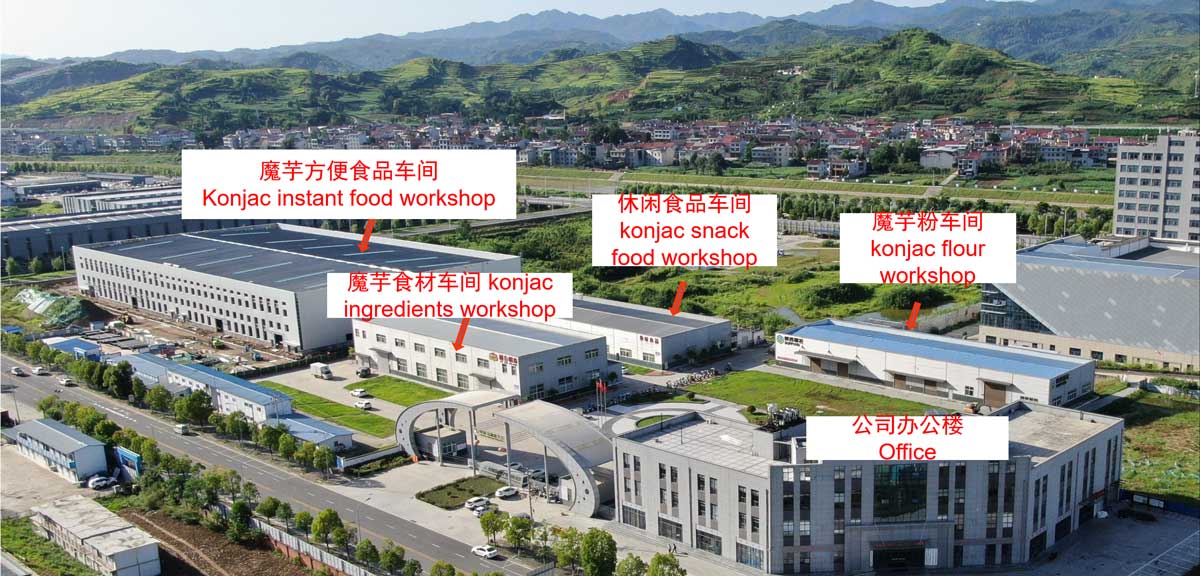
We offer full-process customized services from product design, R&D to manufacturing. We support customers to independently define product formulas, specifications, packaging and process flows according to their own needs, and we are responsible for production implementation to help customers create exclusive branded products.

We provide one-stop professional foreign trade export services, covering customs declaration, inspection, international logistics, document processing and other full-link services. We support two trade terms: FOB (Free On Board) and CIF (Cost, Insurance and Freight), and offer various international freight solutions such as door-to-port and port-to-port to ensure safe and on-time delivery of goods to global destinations.

We carry out joint R&D cooperation with enterprises in different industries, integrating the technical, resource and market advantages of both parties to jointly develop innovative products. Focusing on the fields of healthy food and functional ingredients, we create differentiated products that meet new market demands through cross-border technology integration and formula innovation.

We provide full-link support for brand marketing and communication, including market research, brand positioning, content planning, and online & offline promotion planning. Combining industry trends with customer brand characteristics, we develop precise promotion strategies to enhance product visibility and market share.