
 86+09153618258
Leave Your Message
-
Contact Phone
-
 Contact Email
Discover our flagship konjac flour–based snack lines crafted for vegetarian brand partners — low-calorie, high-fiber, and ready for global retail shelves.
From a traditional Asian root vegetable to a global functional superfood ingredient — konjac flour is redefining what plant-based snacking can be.
Konjac flour, derived from the dried and milled corm of Amorphophallus konjac, has rapidly evolved from a niche Asian pantry staple into one of the most strategically important ingredients in the global vegetarian and plant-based snack industry. Its extraordinary concentration of glucomannan — a soluble dietary fiber that can absorb up to 100 times its own weight in water — gives product developers an almost uniquely flexible functional platform: texturizer, fat replacer, calorie reducer, and gut-health booster, all in a single clean-label ingredient.
🌟 Key insight: Konjac glucomannan is one of the most viscous dietary fibers known to food science. A mere 1–3% addition to a snack formulation can dramatically alter texture, reduce caloric density, and increase satiety — making it the ideal functional anchor for vegetarian snack brands targeting health-conscious consumers.
The global konjac products market was valued at approximately USD 1.2 billion in 2023 and is forecast to surpass USD 3.5 billion by 2032, growing at a compound annual growth rate (CAGR) of over 12%. This explosive growth is being driven by a convergence of macro trends: the rise of flexitarianism and veganism, escalating demand for low-GI functional foods, clean-label consumer expectations, and the booming "better-for-you" snack segment across North America, Europe, Southeast Asia, and beyond.
Vegetarian snack brands — from boutique health-food startups to established FMCG giants — are increasingly turning to konjac flour as a cornerstone ingredient. Its versatility allows it to be incorporated into a staggering breadth of product formats: noodles, rice alternatives, chips, crisps, gummies, tofu-style blocks, jellies, and even baked goods. For brand owners, this means a single supplier relationship with a konjac flour manufacturer can unlock an entire portfolio of differentiated SKUs.
From a commercial standpoint, the konjac flour supply chain has matured considerably over the past decade. China — particularly Yunnan, Sichuan, and Hubei provinces — remains the world's dominant producer of raw konjac corms, accounting for over 90% of global supply. However, significant value-added processing capacity has developed in China, Japan, South Korea, and increasingly in Southeast Asian nations such as Vietnam and Indonesia.
For vegetarian snack brands sourcing konjac flour at scale, several industrial considerations are critical. First, glucomannan purity levels vary significantly across grades — food-grade konjac flour typically contains 40–60% glucomannan, while refined konjac glucomannan (KGM) powder can reach 90%+ purity. The choice of grade directly impacts product texture, caloric profile, and regulatory compliance in target export markets. Second, particle size and viscosity specifications must be carefully matched to the intended processing method — extrusion, wet mixing, or gel-casting each demand different rheological profiles. Third, allergen-free and non-GMO certification, along with HALAL, KOSHER, and organic credentials, are increasingly table-stakes requirements for brands targeting premium retail channels in Western markets.
Konjac noodles — shirataki-style or Asian cold-noodle formats — represent the most commercially mature application. With near-zero net carbohydrates and a satisfying chewy texture, they appeal directly to vegetarian, vegan, keto, and diabetic consumer segments simultaneously. Regional flavor adaptation (e.g., Xi'an cold noodle seasoning, Malaysian spicy profiles, Japanese tsuyu) allows brands to serve diverse global markets from a single manufacturing base.
Perhaps the fastest-growing format, konjac crisps leverage the ingredient's ability to form thin, structurally stable films when dried or baked. The resulting snack delivers a satisfying crunch with a fraction of the calories of potato or corn chips. Brands can position these products as "guilt-free" snacking solutions, supported by genuine nutritional credentials rather than marketing spin.
By blending konjac flour with plant proteins (soy, pea, or rice protein), manufacturers can create high-protein konjac tofu blocks that appeal to vegetarian athletes and fitness-focused consumers. These products bridge the gap between traditional tofu and modern functional food, offering superior texture stability and longer shelf life.
In the Asian snack market — and increasingly in Western markets influenced by Asian food culture — konjac spicy slices, marinated konjac blocks, and bite-sized konjac snacks have become a multi-billion-dollar category. The neutral flavor base of konjac makes it an ideal carrier for bold, complex seasoning profiles: Sichuan mala, Korean gochujang, Japanese teriyaki, or Southeast Asian sambal.
Konjac flour is increasingly being adopted as a gelatin replacement in vegetarian gummy confectionery. Unlike carrageenan or pectin, konjac-based gels offer a unique, firm-yet-chewy texture that closely mimics traditional gelatin gummies — a significant advantage for brands targeting vegetarian and vegan consumers who have historically been underserved in the confectionery aisle.
Key market metrics that define the commercial opportunity for vegetarian snack brands adopting konjac flour.
Six compelling technical and commercial advantages that make konjac flour the go-to ingredient for forward-thinking plant-based snack innovation.
Konjac flour is entirely derived from a root vegetable with no animal-derived processing aids, making it fully compliant with vegan, vegetarian, and plant-based certifications across global markets.
With near-zero digestible calories, konjac flour enables snack brands to create genuinely low-calorie products without relying on artificial sweeteners or synthetic fat replacers.
Konjac glucomannan is approved by the European Food Safety Authority (EFSA) for satiety and blood glucose management claims — giving brands substantiated health messaging for premium positioning.
Konjac flour's compatibility with standard food processing equipment — extruders, mixers, dryers — means brands can scale production rapidly without major capital investment in specialized machinery.
Konjac flour holds food-grade approval in the EU, USA (FDA GRAS), China, Japan, Southeast Asia, and the Middle East — simplifying cross-border export for brands with global distribution ambitions.
The neutral taste profile of konjac flour makes it a blank canvas for bold seasoning, regional flavor adaptation, and novel product formats — from crispy chips to chewy gummies to silky noodles.
A strategic overview of how konjac flour maps to different product formats, target consumers, and key selling propositions.
| Product Format | Konjac Flour Function | Target Consumer | Key Brand Claim |
|---|---|---|---|
| Konjac Noodles / Cold Noodles | Primary structural matrix, texture agent | Vegan, low-carb, weight management | Zero-calorie pasta alternative |
| Konjac Crisps / Chips | Film-forming agent, texturizer | Health-conscious snackers, fitness | Guilt-free crunchy snack |
| Konjac Spicy Slices / Bites | Gel matrix, flavor carrier | Gen Z, Asian food enthusiasts | Bold flavor, plant-based protein |
| Konjac Tofu (High-Protein) | Structural gel + protein blend | Vegetarian athletes, flexitarians | High-protein, clean-label tofu |
| Konjac Gummies / Confectionery | Gelatin replacement, gelling agent | Vegan confectionery consumers | Gelatin-free, plant-based gummy |
| Konjac Rice / Grain Alternatives | Bulking agent, calorie dilution | Diabetic, low-GI diet followers | Low-GI rice alternative |
Several macro and micro trends are converging to accelerate konjac flour adoption among vegetarian snack brands over the next five years. Understanding these trends is essential for brand owners and procurement teams making strategic ingredient sourcing decisions.
Consumer research consistently shows that "high protein" and "high fiber" are the two most compelling health claims on snack packaging. By blending konjac flour with plant protein concentrates, brands can achieve both claims simultaneously — a powerful dual-positioning that commands premium shelf prices and drives repeat purchase in health food retail channels.
Authentic Asian flavor profiles — Xi'an cold noodle seasoning, Malaysian curry, Korean fire chicken — are experiencing unprecedented global consumer demand, driven by social media food culture and diaspora communities. Konjac flour's neutral base makes it the ideal vehicle for delivering these complex, authentic flavor experiences in convenient snack formats for Western markets.
Konjac cultivation requires minimal pesticide use, thrives in marginal agricultural land, and has a significantly lower carbon footprint than animal-derived snack ingredients. As sustainability reporting becomes a commercial imperative for FMCG brands, konjac flour offers a genuinely compelling environmental story that can be communicated transparently to eco-conscious consumers.
The global prebiotic and gut health supplement market is growing at double-digit rates. Konjac glucomannan is a prebiotic fiber with robust clinical evidence supporting its role in promoting beneficial gut microbiota. Vegetarian snack brands that lead with gut health messaging — backed by konjac's EFSA-approved health claims — are finding strong resonance with the wellness-oriented consumer segment.
The democratization of e-commerce and the rise of direct-to-consumer (DTC) food brands have lowered barriers to entry for new vegetarian snack brands. OEM/ODM konjac flour manufacturers now offer minimum order quantities and customization options that make it viable for early-stage brands to launch differentiated konjac snack lines without owning manufacturing assets — a structural shift that is accelerating category growth and SKU diversity.
End-to-end commercial and technical support designed specifically for vegetarian snack brands building with konjac flour.
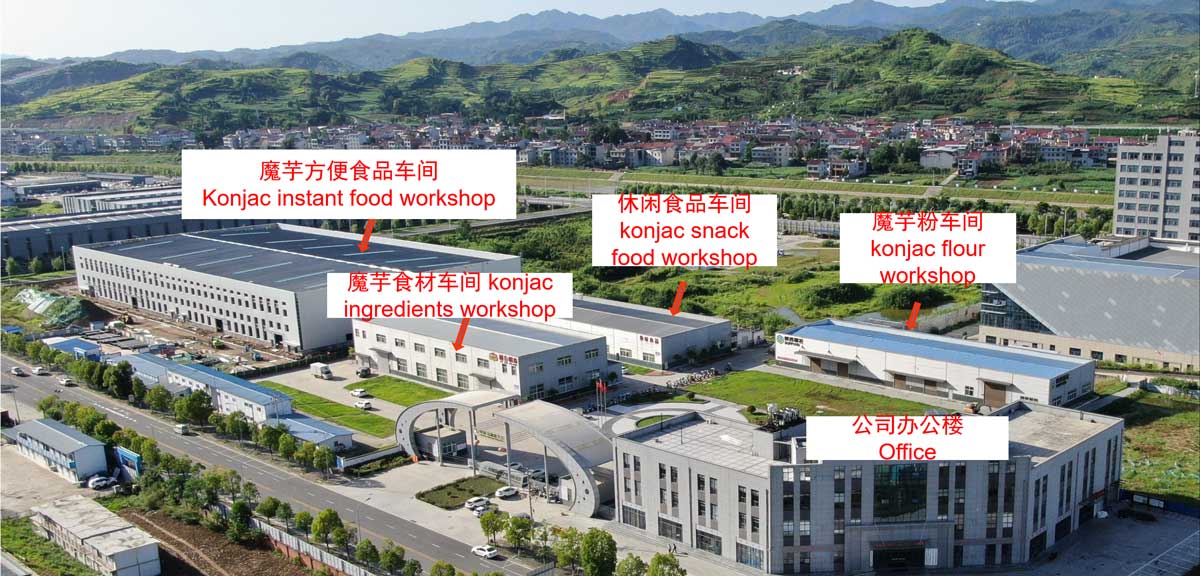
We offer full-process customized services from product design, R&D to manufacturing. We support customers to independently define product formulas, specifications, packaging and process flows according to their own needs, and we are responsible for production implementation to help customers create exclusive branded products.

We provide one-stop professional foreign trade export services, covering customs declaration, inspection, international logistics, document processing and other full-link services. We support two trade terms: FOB (Free On Board) and CIF (Cost, Insurance and Freight), and offer various international freight solutions such as door-to-port and port-to-port to ensure safe and on-time delivery of goods to global destinations.

We carry out joint R&D cooperation with enterprises in different industries, integrating the technical, resource and market advantages of both parties to jointly develop innovative products. Focusing on the fields of healthy food and functional ingredients, we create differentiated products that meet new market demands through cross-border technology integration and formula innovation.

We provide full-link support for brand marketing and communication, including market research, brand positioning, content planning, and online & offline promotion planning. Combining industry trends with customer brand characteristics, we develop precise promotion strategies to enhance product visibility and market share.
Explore our full lineup of konjac flour–based vegetarian snack products — available for OEM/ODM customization, private label, and direct wholesale export.
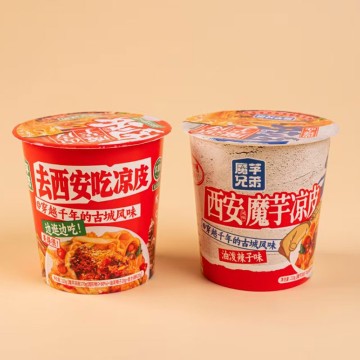 210g Cup-Style Xi'an Konjac Cold Noodles (Xi'an Specialty Limited Edition)
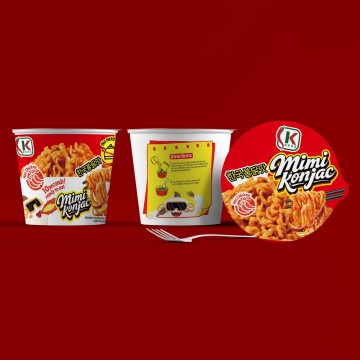 90g Konjac Noodles With HALAL Certificates
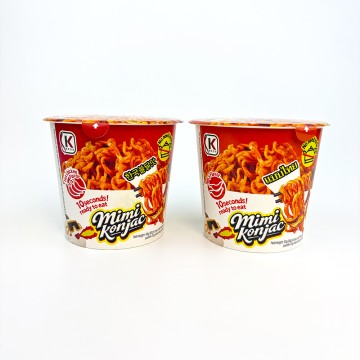 90g Konjac Noodles (Spicy Flavor & Hot Chicken Flavor) – Malaysia Exclusive Edition
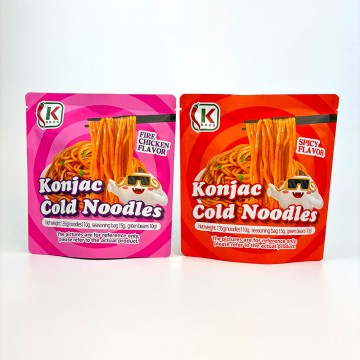 KONJAC BROTHERS Konjac Noodles (135g Pouch)
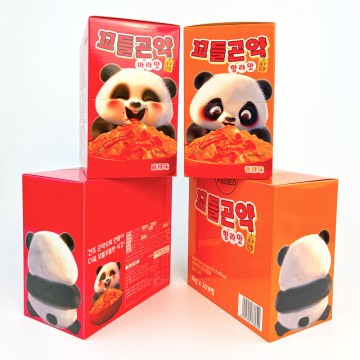 KONJAC BROTHERS Konjac Spicy Slices 360g Boxed
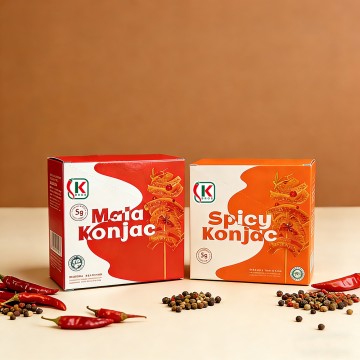 Factory Price Konjac Crisps 200g Boxed
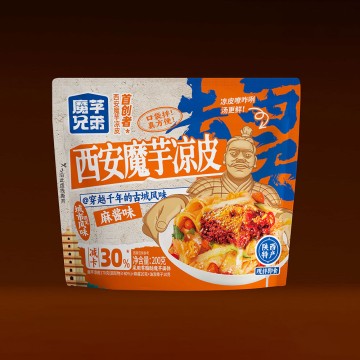 Xi'an Konjac Cold Noodles (200g Pouch) - Sesame Paste Flavor
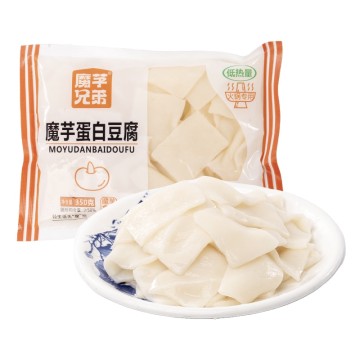 Konjac Brothers High-Protein Konjac Tofu (350g)