86+09153618258
Leave Your Message
-
Contact Phone
-
 Contact Email
The global instant convenience food market is experiencing a paradigm shift, with health-conscious consumers demanding nutritious alternatives to traditional instant meals. Konjac pasta has emerged as a revolutionary ingredient that perfectly addresses this demand. Derived from the konjac plant (Amorphophallus konjac), native to East Asia, this unique food product offers an exceptional combination of convenience, health benefits, and culinary versatility that is transforming the instant food landscape.
The instant convenience food sector, valued at over $95 billion globally, has traditionally been dominated by high-carbohydrate, calorie-dense products. However, the increasing prevalence of lifestyle diseases, obesity concerns, and growing awareness of nutritional wellness have created an urgent need for healthier alternatives. Konjac pasta addresses this gap by providing a low-calorie, low-carbohydrate, high-fiber option that doesn't compromise on convenience or taste.
Konjac pasta contains approximately 97% water and 3% glucomannan fiber, resulting in a product that has nearly zero net carbohydrates and only 5-10 calories per 100-gram serving. This nutritional profile makes it an ideal base for instant convenience foods targeting weight management, diabetic-friendly diets, ketogenic lifestyles, and general health optimization. The glucomannan fiber also provides exceptional satiety, helping consumers feel fuller for longer periods while consuming fewer calories.
Market Insight: The global konjac products market is projected to grow at a CAGR of 8.5% through 2030, with instant convenience applications representing the fastest-growing segment. This growth is driven by increasing consumer demand for functional foods that support weight management and digestive health.
The commercial adoption of konjac pasta in instant convenience food applications has accelerated significantly over the past five years. Major food manufacturers across Asia, North America, and Europe have integrated konjac-based products into their instant meal portfolios. Companies are developing innovative product formats including instant konjac noodle cups, ready-to-eat konjac pasta meals, konjac rice bowls, and konjac-based meal replacement systems.
Industrial production capabilities have evolved dramatically to meet growing demand. Modern manufacturing facilities utilize advanced extrusion technologies, precision cutting systems, and automated packaging lines specifically designed for konjac pasta products. These facilities can produce various shapes and formats—from traditional Asian noodle styles to Western pasta shapes like fettuccine, penne, and spaghetti—all optimized for instant preparation methods.
The supply chain infrastructure supporting konjac pasta production has become increasingly sophisticated. Konjac cultivation has expanded beyond traditional growing regions in China and Japan to include Indonesia, Myanmar, and parts of Africa. Processing facilities have implemented quality control systems that ensure consistent texture, flavor neutrality, and shelf stability—critical factors for instant convenience food applications.
Distribution channels have diversified significantly, with konjac instant products now available through mainstream supermarkets, specialty health food stores, online retail platforms, and increasingly through convenience stores and vending machines. This broad distribution reflects the product's transition from niche health food to mainstream convenience option.
Several transformative trends are shaping the future of konjac pasta in instant convenience food applications. Hybrid formulations combining konjac with other functional ingredients represent a major innovation direction. Manufacturers are developing products that blend konjac with whole grains, legume flours, vegetable powders, and protein concentrates to create nutritionally enhanced instant meals that appeal to broader consumer segments while maintaining health benefits.
Flavor innovation has become a critical competitive differentiator. While early konjac products emphasized the ingredient's neutral taste as an advantage, contemporary product development focuses on creating distinctive, appealing flavor profiles. Regional flavor adaptations—from Korean spicy profiles to Italian herb combinations to Southeast Asian curry variants—are expanding market reach and consumer acceptance.
Sustainability considerations are increasingly influencing product development and marketing strategies. Konjac cultivation requires minimal pesticides, has low water requirements compared to grain crops, and the plant's root system helps prevent soil erosion. These environmental benefits align perfectly with consumer demand for sustainable food choices, providing powerful marketing narratives for instant convenience products.
Technological advancement in preparation methods is eliminating traditional barriers to konjac pasta adoption. New processing techniques have reduced or eliminated the characteristic odor that deterred some consumers, improved texture to more closely mimic traditional pasta, and shortened preparation times to under three minutes for most instant formats. Some innovative products now require only the addition of hot water, matching the convenience of traditional instant noodles.
The application landscape for konjac pasta in instant convenience food extends far beyond simple noodle replacements. Healthcare and medical nutrition represents a significant growth area, with hospitals, rehabilitation centers, and medical nutrition companies incorporating konjac-based instant meals into therapeutic diet programs for diabetes management, obesity treatment, and digestive health support.
Corporate wellness programs increasingly feature konjac instant meals as part of workplace health initiatives. Companies provide these products in office pantries, vending machines, and cafeterias as healthy alternatives that support employee wellness goals while maintaining the convenience essential for busy work environments.
The fitness and athletic nutrition sector has embraced konjac pasta for specific applications. Post-workout recovery meals, pre-competition carbohydrate management products, and weight-cutting solutions for athletes in weight-class sports all utilize konjac's unique nutritional properties. Instant formats make these products practical for gym bags, training facilities, and travel situations.
Emergency preparedness and outdoor recreation markets represent emerging application areas. Konjac instant products offer long shelf life, lightweight packaging, minimal preparation requirements, and nutritional value—ideal characteristics for emergency food supplies, camping provisions, and hiking meals. Military and disaster relief organizations are evaluating konjac-based instant meals for field rations and emergency response supplies.
Specialized dietary applications continue to expand. Konjac instant products serve consumers following ketogenic, paleo, vegan, gluten-free, and low-FODMAP diets. This versatility across multiple dietary frameworks provides manufacturers with diverse market opportunities and consumers with convenient options that align with their specific nutritional requirements.
The business-to-business segment for konjac instant convenience food is experiencing remarkable growth. Food service operators including restaurants, cafeterias, and catering companies are incorporating konjac pasta into menu offerings to address customer demands for healthy options. The instant preparation format reduces kitchen labor requirements while maintaining quality consistency—critical factors for commercial food operations.
Private label opportunities represent substantial business potential. Retailers and specialty food brands are developing proprietary konjac instant meal products to differentiate their offerings and capture margin opportunities. Contract manufacturers specializing in konjac processing provide turnkey solutions that enable brands to enter this market segment without significant capital investment in specialized production facilities.
Ingredient supply for food manufacturers constitutes another significant B2B channel. Companies producing meal kits, frozen dinners, and other packaged food products incorporate konjac pasta as a component ingredient, leveraging its health benefits and convenience properties to enhance their product portfolios.
Innovation Spotlight: Next-generation konjac instant products incorporate smart packaging with QR codes linking to nutritional tracking apps, preparation video tutorials, and personalized meal planning tools, creating integrated digital-physical consumer experiences.
Consumer adoption patterns reveal important insights for market development. Initial purchase motivations center primarily on health benefits—weight management, blood sugar control, and digestive health. However, repeat purchase decisions depend heavily on taste satisfaction, preparation convenience, and value perception. Successful products balance health benefits with sensory appeal and practical usability.
Price positioning strategies vary significantly across markets and channels. Premium positioning emphasizes superior quality, organic certification, and specialized formulations, while value positioning focuses on cost-per-serving comparisons with traditional instant meals. The optimal strategy depends on target consumer segments, competitive landscape, and distribution channels.
Educational marketing remains essential for market expansion. Many consumers lack familiarity with konjac and require information about its origins, nutritional properties, and preparation methods. Brands investing in consumer education through content marketing, sampling programs, and influencer partnerships achieve higher conversion rates and stronger brand loyalty.
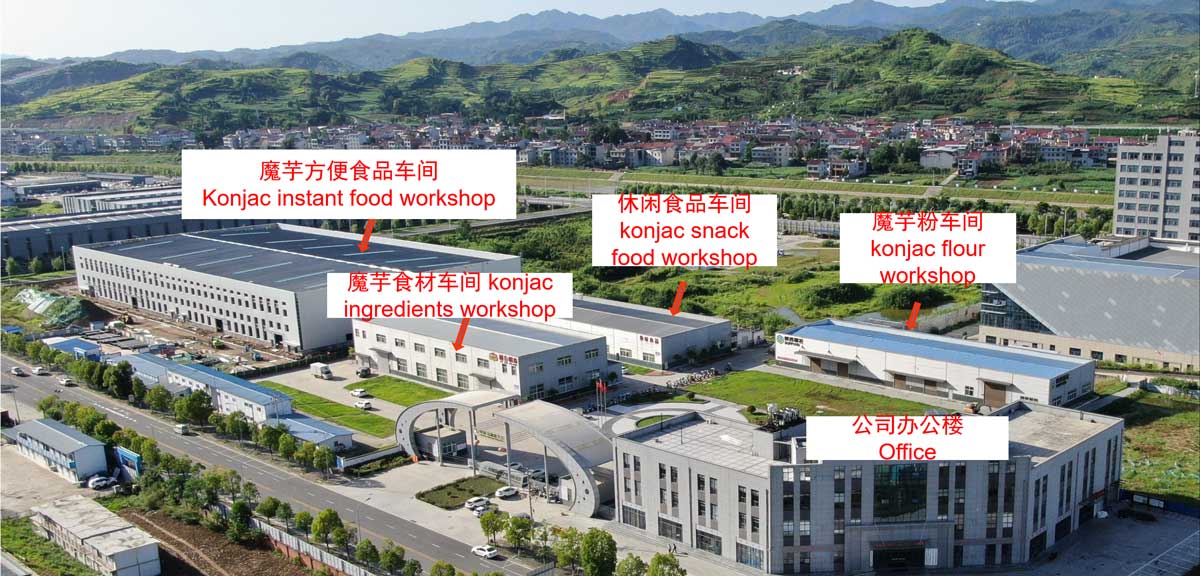
We offer full-process customized services from product design, R&D to manufacturing. We support customers to independently define product formulas, specifications, packaging and process flows according to their own needs, and we are responsible for production implementation to help customers create exclusive branded products.

We provide one-stop professional foreign trade export services, covering customs declaration, inspection, international logistics, document processing and other full-link services. We support two trade terms: FOB (Free On Board) and CIF (Cost, Insurance and Freight), and offer various international freight solutions such as door-to-port and port-to-port to ensure safe and on-time delivery of goods to global destinations.

We carry out joint R&D cooperation with enterprises in different industries, integrating the technical, resource and market advantages of both parties to jointly develop innovative products. Focusing on the fields of healthy food and functional ingredients, we create differentiated products that meet new market demands through cross-border technology integration and formula innovation.

We provide full-link support for brand marketing and communication, including market research, brand positioning, content planning, and online & offline promotion planning. Combining industry trends with customer brand characteristics, we develop precise promotion strategies to enhance product visibility and market share.
The future trajectory of konjac pasta in instant convenience food appears exceptionally promising. Technological innovations in processing, formulation, and packaging will continue expanding application possibilities and consumer appeal. Regulatory developments supporting health claims for glucomannan and konjac products will strengthen marketing capabilities and consumer confidence.
Market expansion into developing economies represents significant growth potential. As middle-class populations expand in Asia, Africa, and Latin America, demand for convenient, healthy food options will accelerate. Konjac pasta products adapted to regional taste preferences and price points can capture substantial market share in these emerging markets.
Integration with digital health ecosystems offers transformative possibilities. Konjac instant meals connected to nutrition tracking apps, telemedicine platforms, and personalized diet programs can provide consumers with comprehensive health management solutions while creating valuable data insights for manufacturers.
Sustainability credentials will become increasingly important competitive differentiators. As environmental concerns influence consumer purchasing decisions, konjac pasta's favorable environmental profile—low water usage, minimal pesticide requirements, carbon sequestration benefits—will provide significant marketing advantages over conventional instant food products.
Strategic Recommendation: Companies entering or expanding in the konjac instant convenience food market should prioritize product innovation, consumer education, and strategic partnerships to build competitive advantages in this rapidly evolving sector.