 86+09153618258
Leave Your Message
-
Contact Phone
-
 Contact Email
A technological synthesis of pure glucomannan polysaccharides and denatured soy/pea isolates reshaping modern vegetarian brand economics.
The contemporary global snack industry is witnessing a structural transformation. Conventional vegetarian snacks have historically relied upon puffed grains, wheat gluten, deep-fried starches, or heavily processed extruded isolates. While these ingredients provide early tactile satisfaction, they routinely present formidable clean-label liabilities: excessive glycemic loads, high trans-fat counts, artificial flavor reliance, and severe moisture degradation under ambient logistics. Vegetarian snack manufacturers are therefore migrating en masse toward biomacromolecular hybrids—most notably Konjac Protein Tofu.
Konjac Protein Tofu is neither standard soy curd nor simple shirataki konjac. It is a thermally irreversible interpenetrating polymer network (IPN). In this matrix, high-purity konjac glucomannan (KGM)—a high molecular weight polysaccharide composed of D-mannose and D-glucose linked by β-1,4-glucosidic bonds—is co-crosslinked with denatured globular proteins (isolated soy protein, yellow pea protein, or brown rice protein). The resulting substance boasts the high tensile elasticity, micro-porous bite, and chew resistance of cured muscle meat, all while maintaining an extraordinarily clean caloric profile, high prebiotic dietary fiber, and neutral background aromatics.
Industrial Formulation Insight: The co-gelation of KGM with plant protein isolates requires precise deacetylation under alkaline parameters (pH 9.5 to 11.2) before thermo-setting. This mechanism locks water molecules within a 3D structural lattice that resists syneresis, even during high-pressure thermal processing (retort at 121°C for 25 minutes).
For independent food brands, boutique snack startups, and multinational consumer packaged goods (CPG) conglomerates, Konjac Protein Tofu unlocks unprecedented commercial advantages:
Analyzing the manufacturing feasibility and target consumer appeal across high-demand retail formats.
Diced or shredded konjac protein tofu steeped in artisan red oil, crushed Sichuan peppercorns, and roasted cumin. The porous matrix captures the fiery lipid emulsion, offering consumers the mouth-watering snap of tripe or tendon without animal collateral.
Pressed and dehydrated konjac protein tofu cut into fibrous ribbons. Seasoned with maple smoke, natural liquid hickory, and tamari soy glaze. Replicates the dense, fibrous shear resistance of beef jerky with less than a third of the calories.
Pre-marinated, vacuum-sealed konjac protein tofu cubes designed to be eaten directly out of the pouch or sprinkled over fresh salads, instant broth bowls, and grain medleys for instantaneous satiating protein and fiber spikes.
By leveraging ultra-low temperature vacuum frying (VF technology), moisture inside the konjac protein matrix rapidly sublimates, creating a hollow, puffed, brittle crunch similar to deep-fried cracklings but without oil saturation.
Formulated without sugar alcohols or modified starches, these savory bites utilize natural stevia or monkfruit along with sea salt and rosemary extracts. Perfect for specialized metabolic fitness demographics and blood glucose control.
Mildly seasoned with rich tomato essence, savory yeast extracts, or sweet corn purée. Offers parents a non-allergenic, mess-free, shelf-stable protein snack alternative that avoids peanuts, tree nuts, and excessive salt.
Scientific validation demonstrating why hydrocolloid protein composites outperform legacy meat analogs.
| Performance Characteristic | Konjac Protein Tofu Matrix | Traditional Soy Curd (Tofu) | Extruded Wheat Gluten (Seitan) | Texturized Pea Protein (TVP) |
|---|---|---|---|---|
| Caloric Density (kcal/100g) | 25 - 45 kcal | 80 - 120 kcal | 140 - 180 kcal | 110 - 160 kcal |
| Water Retentivity Post-Retort | Superior (0% Syneresis) | Poor (High Sponging & Weeping) | Moderate (Becomes Mushy) | Unstable (Softens Over Time) |
| Chewiness / Tensile Springiness | High Elasticity, Meat-like Snap | Brittle, Crumbles Easily | Dense, Heavy, Doughy | Fibrous but Spongy |
| Dietary Fiber Profile | High Soluble Prebiotic Fiber | Negligible (<1.5g) | Low (<1.0g) | Moderate (3 - 5g) |
| Allergen Inclusivity | Soy-Free & Gluten-Free Options | Contains Soy (Major Allergen) | Contains Gluten (Major Allergen) | Hypoallergenic |
| Room Temp Ambient Logistics | 12 - 18 Months Confirmed | Not Viable (Cold Chain Only) | Requires Preservatives | Requires Nitrogen Flush |
The transition from laboratory bench to continuous multi-ton industrial output presents complex rheological hurdles. Konjac glucomannan powder exhibits rapid hydration kinetics, creating an extremely viscous pseudoplastic fluid at concentrations as low as 1.0%. To achieve a flawless protein tofu morphology without phase separation:
1. Controlled High-Shear Micro-Dispersion: The plant protein isolate must first be fully hydrated and dissolved under high-shear homogenizing blenders to unfurl the tertiary structure of glycinin and beta-conglycinin. Konjac flour is subsequently introduced under vacuum deaeration to eliminate micro air bubbles that would otherwise cause cavitation during sterilization.
2. Alkaline Thermo-Irreversible Gelation: Unlike carrageenan or agar, which produce thermoreversible gels that melt upon reheating, KGM forms an irreversible covalent crosslinked gel network in the presence of mild alkalis (such as food-grade calcium hydroxide or sodium carbonate). Once heat-set at 85°C to 95°C, the chemical bonds do not degrade, allowing the tofu to retain its crisp, firm bite through autoclaving.
3. Flavor Imbibition and Vacuum Marination: Following slicing or mechanical stamping into desired shapes (cubes, knots, slices, crinkle-cuts), the material undergoes dynamic vacuum-pulsed tumbling. Negative pressure draws seasoning oils, oleoresins, and umami bouillons deep into the cellular voids, ensuring flavor persistence through the entire chew.
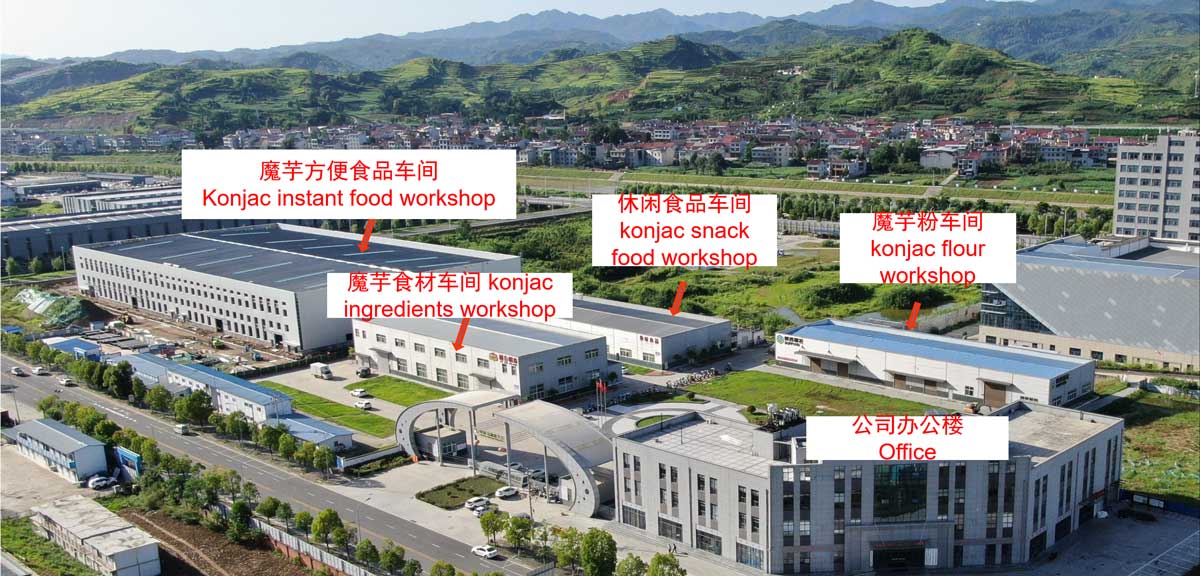
Comprehensive turnkey solutions from ingredient synthesis and pilot extrusion to international customs clearance and go-to-market strategy.



Beyond texture and shelf stability, vegetarian snack brands today face rigorous scrutiny concerning their ESG (Environmental, Social, and Governance) impact. Konjac (Amorphophallus konjac) emerges as an ecologically superior crop when compared against bovine agriculture or monoculture soybeans. Grown predominantly in mountainous, subtropical terrains, konjac requires minimal artificial irrigation and thrives under forest canopies without necessitating deforestation. Its water footprint per metric ton of functional dry matter is a fraction of that required for livestock or high-input almond and nut groves.
Furthermore, because Konjac Protein Tofu can be distributed, stored, and merchandised at ambient temperatures without refrigeration, downstream carbon emissions throughout wholesale freight, regional warehousing, and retail shelf display are slashed by up to 60%. This ambient stability virtually eliminates retail spoilage waste—a primary contributor to corporate landfill impact metrics.
Formulating konjac-based snack lines for worldwide retail distribution demands precise harmonization with international regulatory bodies: