
 86+09153618258
Leave Your Message
-
Contact Phone
-
 Contact Email
Featured ready-to-eat formulations crafted for international Halal retail networks and health-conscious consumers
A multidimensional analysis of regulatory standards, demographic growth, and functional plant-based advantages
Naturally free from swine derivatives and ethanol cross-contamination, pure Amorphophallus Konjac provides a naturally permissible (Halal) foundation requiring zero enzymatic non-Halal modifications.
Possessing an exceptional water-binding capacity up to 50 times its weight, glucomannan forms a satiating dietary matrix that addresses rising glycemic and cardiovascular wellness goals in Halal consumer segments.
Aligning with Gulf Cooperation Council (GCC) standards, JAKIM (Malaysia), and BPJPH (Indonesia), konjac snacks bypass traditional red-meat supply vulnerabilities via automated sanitary manufacturing pipelines.
The global Halal food and beverage market has expanded rapidly beyond religious obligation, emerging as an international benchmark for safety, hygiene, and ethical provenance. Surpassing a global valuation of $1.5 trillion, the market is characterized by a young, urbanized demographic across Southeast Asia, the Middle East, North Africa, and growing diaspora communities throughout Europe and North America. Today's Muslim consumers are not merely seeking Halal certification—they are actively prioritizing functional attributes, including ketogenic alignment, low glycemic load, natural prebiotic fiber, and vegan certification.
In this expanding landscape, conventional extruded snacks and gelatin-based confectionery encounter systematic challenges. Traditional snacks commonly rely on bovine or porcine gelatin, questionable emulsifiers (such as mono- and diglycerides of fatty acids without certified vegetable origins), and synthetic carriers that require stringent verification. Here, Konjac snacks (derived from Amorphophallus konjac) represent an ideal botanical replacement. Containing high concentrations of soluble dietary fiber—specifically konjac glucomannan (KGM)—these formulations naturally fulfill the requirements for Halal integrity (Tayyib), representing purity, cleanliness, and positive physiological nutrition.
Deploying konjac formulations inside Halal-compliant production chains requires precise chemical and thermodynamic parameters. Glucomannan is non-ionic and forms highly viscous colloidal sols at low concentrations. In manufacturing shelf-stable snacks—such as spicy marinated strips, jelly pouches, crisp konjac chips, or restructured mock seafood—the transition from sol to an irreversible hydrogel typically requires an alkaline setting agent (such as food-grade calcium hydroxide).
To qualify for strict Halal standards (such as MS 1500:2019 or HAS 23000):
A. Flavoring and Seasoning Carriers: Snack seasonings must eliminate ethyl alcohol extraction residues, animal-derived taste enhancers, or ambiguous flavor precursors. Every spice extract, hydrolysate, and oleoresin applied to konjac matrices must be certified Halal at origin.
B. Gel Stabilization and Preservation: Unlike porcine gelatin, which is intrinsically prohibited (Haram), konjac's gel elasticity is completely plant-derived. However, the wet-preservation fluid in vacuum packaging must avoid non-certified acids or microbial stabilizers, deploying sterile, purified thermal processing and food-grade organic citrates or lactates instead.
C. Line Segregation and Automation: Modern industrial konjac snack lines integrate continuous extrusion, cutting, alkaline bath bath-neutralization, dynamic rinsing, sterilization retorts, and cleanroom secondary packing. Total automation eliminates manual contact and prevents cross-contamination with non-Halal ingredients throughout the manufacturing cycle.
Comprehensive deployment paradigms for FMCG brands, modern retail chains, and functional food formulators
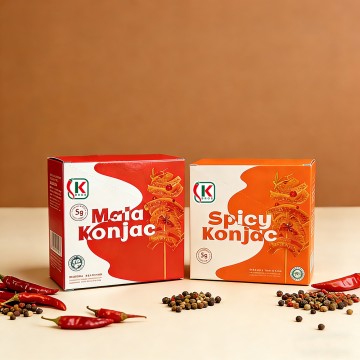
In modern convenience distribution—from 7-Eleven outlets across Southeast Asia to petrol stations in the UAE—there is a major demand for savory, on-the-go snacks that emulate the chewiness and muscle-fiber texture of beef tripe or shredded squid without using non-Halal animal components. Konjac can be textured through micro-void extrusion techniques into shredded slices or crisp cubes. When infused with certified Halal regional seasonings—such as Sichuan mala oil, Indonesian rendang spices, Arabic cumin blends, or smoked paprika—konjac absorbs complex aromatic lipids without breaking down. With less than one-third the caloric density of wheat-based snacks, this delivers an appealing bite for fitness-oriented younger consumers.
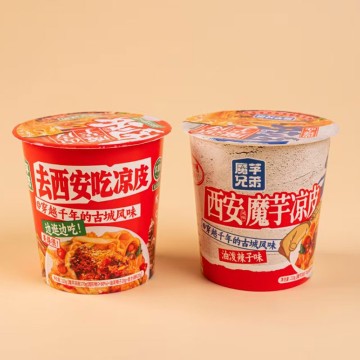
Diabetic awareness and metabolic syndrome concerns have risen prominently across the GCC and Asia-Pacific. Staple diets dominated by refined carbohydrates (such as white rice and wheat flatbreads) create distinct metabolic challenges. Halal-certified konjac noodles (shirataki), cup-packaged cold noodles, and konjac rice present immediate industrial substitutes. Configured into shelf-stable, microwave-safe bowls with Halal-certified paste sauces (such as Korean Gochujang, Thai Tom Yum, or Chinese Sesame Chili), these products serve the growing population of working urban professionals seeking fast, shelf-stable, zero-sugar meal solutions.
Gelatin represents a persistent challenge for the global confection market. Bovine gelatin, while acceptable if slaughtered under Islamic rites, carries high supply costs, susceptibility to disease-related import bans, and frequent certification disputes. Konjac glucomannan, compounded synergistically with carrageenan and sodium alginate, creates a clear, heat-reversible, and elastic gel suitable for fruit jellies, high-protein gummies, and Halal vitamin supplements. It resists melt-down in tropical climates where transit temperatures regularly surpass 40°C, providing an operational and logistical benefit for exporters targeting equatorial Halal nations.
Industrial processors of Halal-certified cold cuts, sausages, and fish balls face mounting pressure from escalating animal protein prices. Konjac flour serves as a multifunctional fat mimetic and structural binding agent. When dispersed in cold-emulsion meat systems, konjac retains free moisture and stable fats, substantially lowering production costs while reducing saturated fat content. Furthermore, in completely vegan "Halal seafood" analogs (such as mock squid rings, vegan shrimp, and plant-based fish cakes), konjac replicates the characteristic springy, resilient bite demanded by culinary traditions throughout Malaysia, Singapore, and Indonesia.
Comprehensive manufacturing, R&D, and logistical frameworks tailored for Halal food distributors and international brand partners
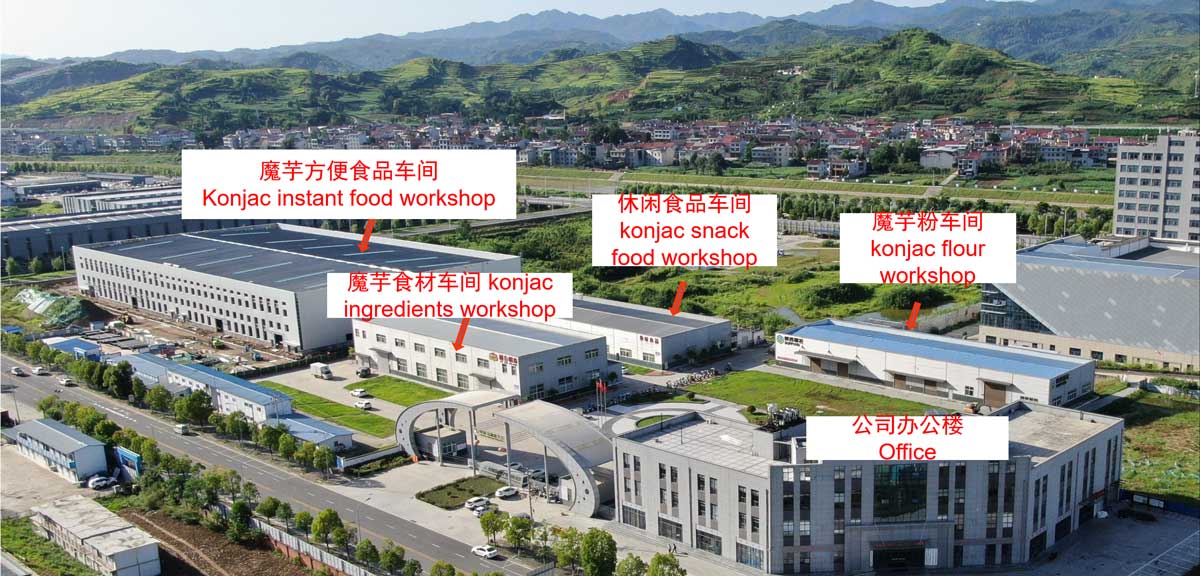



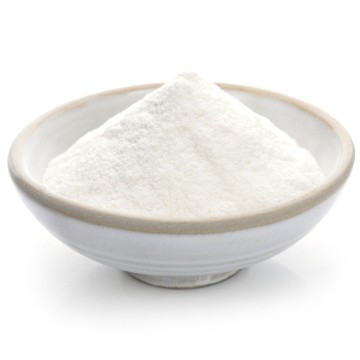
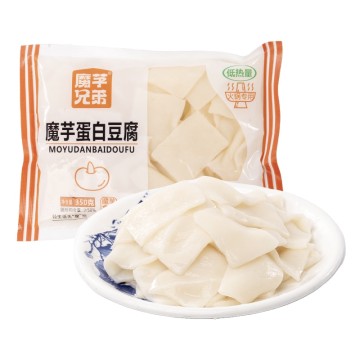
High-purity raw flours, enriched tofu matrices, and convenient noodle assortments compliant with global trade parameters
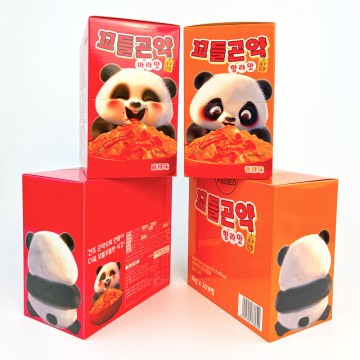
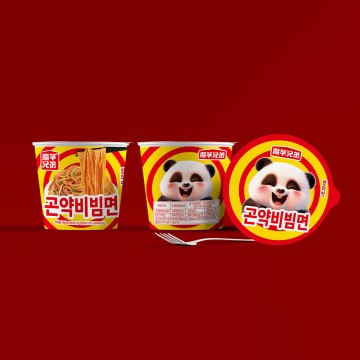
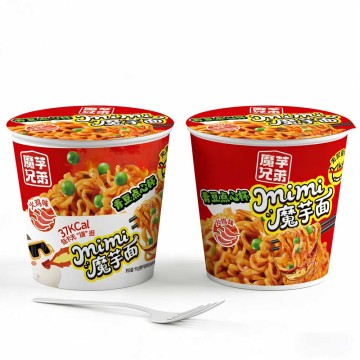
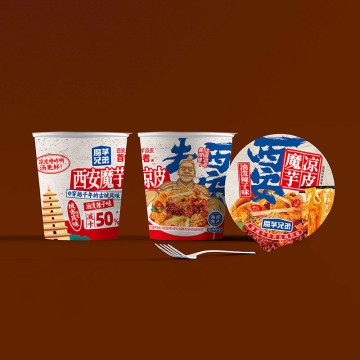
To successfully capture international market share within the global Halal domain, manufacturers and brand partners must observe mutual recognition agreements (MRAs) between regional authorities. Facilities that maintain dual or triple certification across JAKIM (Malaysia), MUI/BPJPH (Indonesia), and SASO (Saudi Arabia) gain an immediate market entry advantage across the 57 member states of the Organisation of Islamic Cooperation (OIC).
Coupling clean-room automated processing with native botanical glucomannan enables modern konjac snacks to satisfy both rigorous religious protocols and prevailing health trends. As consumers worldwide transition toward low-sodium, zero-sugar, and dietary fiber-dense choices, konjac stands as a versatile, shelf-stable, and profitable category driver in contemporary Halal retail distribution networks.