86+09153618258
Leave Your Message
-
Contact Phone
-
 Contact Email
From ancient traditional shirataki to an indispensable technological bulking agent and bioactive hydrocolloid in modern functional food processing.
The global functional nutrition landscape is navigating an unprecedented structural transition. Across Western, European, and Asian Pacific consumer demographics, epidemiological data continues to highlight a persistent nutritional disparity often termed the "fiber gap." With daily dietary fiber intakes lingering around 12 to 15 grams—substantially below the recommended 28 to 38 grams suggested by international health organizations—industrial food developers are under intense regulatory and consumer pressure to formulate viable, palatable, and calorically benign intervention vehicles.
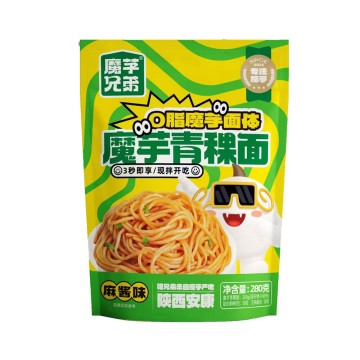
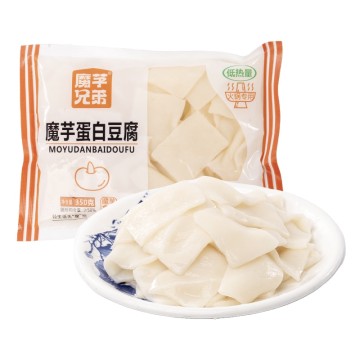
Within this nutritional paradigm, konjac vermicelli (derived from the tuber Amorphophallus konjac) has transitioned out of the narrow confines of conventional Asian cuisine and firmly into the mainstream pharmaceutical and functional food manufacturing ecosystem. At its chemical core is Konjac Glucomannan (KGM), a high-molecular-weight, water-soluble non-ionic polysaccharide composed of β-(1→4)-linked D-mannose and D-glucose residues with a branching ratio of approximately 1.6:1. Its immense intrinsic viscosity and water-swelling coefficient—swelling to over 80 to 100 times its original dry volume—make it the densest and most rheologically potent soluble dietary fiber known to food biochemistry.
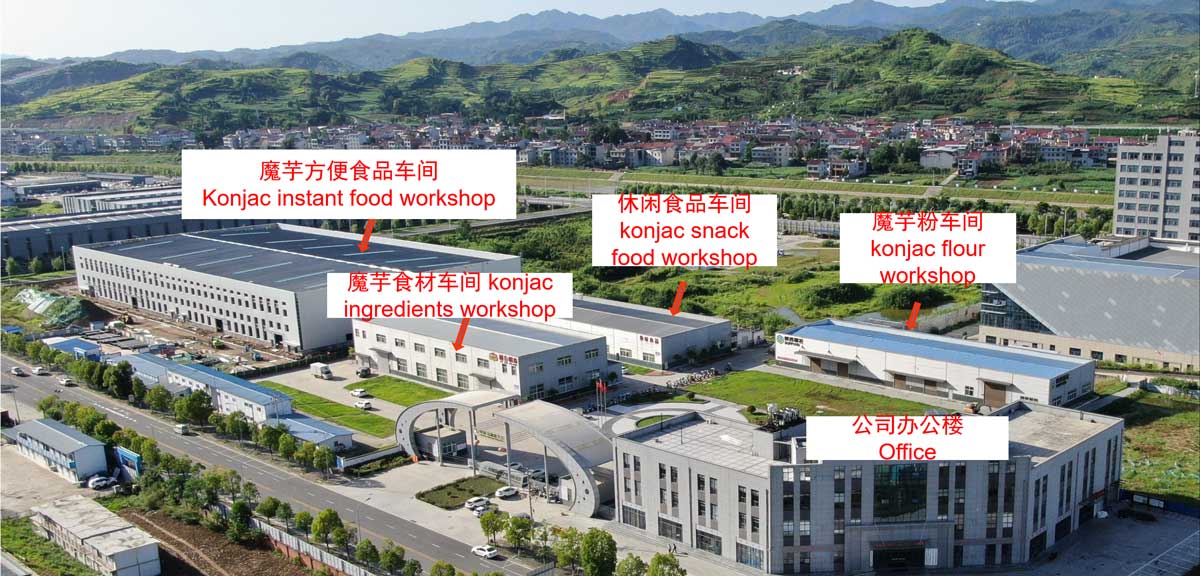
In response, modern commercial supply chains have undergone complete industrial modernization. Gone are the erratic, cottage-industry processing plants of decades past. Modern konjac vermicelli manufacturing is now anchored by automated wet extrusion processing, multi-stage counter-current purification, cold-press deodorization, and precision thermal retort sterilization. Commercial buyers, ranging from clinical meal-replacement developers to supermarket private labels, now demand rigorously standardized fiber metrics, micro-biological safety assurances, and reproducible mechanical elasticity capable of withstanding industrial packaging and distribution.
Konjac Glucomannan exhibits resilient cross-linked hydrogen bonds that resist degradation by human alpha-amylase and upper gastrointestinal gastric acid, ensuring the uncompromised delivery of soluble fiber straight to the distal ileum and cecum.
Upon hydration, the vermicelli creates a viscous hydrogel barrier within the small intestine, physically attenuating carbohydrate and lipid diffusion kinetics, smoothing postprandial glucose excursions, and modulating insulinemia in clinical cohorts.
Acting as a robust prebiotic substrate, glucomannan selectively fuels Bifidobacterium, Lactobacillus, and Faecalibacterium prausnitzii, catalyzing high yields of short-chain fatty acids (SCFAs), notably butyrate and propionate.
Exploring how konjac vermicelli acts as a functional cornerstone across metabolic therapy, athletic conditioning, clinical geriatrics, and next-generation clean-label meal kits.
In therapeutic clinical nutrition, starch-based carbohydrates have historically complicated diet adherence for patients diagnosed with Type-2 Diabetes Mellitus (T2DM) and pre-diabetic insulin resistance. Konjac vermicelli serves as an inert, texture-identical replacement for wheat, semolina, and rice noodles. Because it contains virtually zero net digestible carbohydrates and zero sugar, it effectively eliminates glycemic spikes. Furthermore, long-chain KGM exerts a natural physical-retardation effect on chyme gastric emptying, decelerating digestion and yielding a dramatically lowered Glycemic Index (GI < 15) when consumed alongside protein and complex meal matrices.
The exponential rise of anti-obesity pharmacotherapy (such as GLP-1 receptor agonists) has transformed patient eating behavior, prompting food formulators to emphasize micro-portions packed with maximum nutritional satiety and protective fiber. Konjac vermicelli addresses gastric volume receptors without caloric load. Its ability to expand safely and form a persistent colloidal gel within the lumen stimulates gastric mechanoreceptors, prolonging feelings of fullness and suppressing endogenous ghrelin secretion. For individuals adhering to strict low-carbohydrate, ketogenic, or calorie-restricted lifestyle regimens, it provides comforting pasta-like mouthfeel without triggering ketosis disruption.
Modern geriatric medical facilities encounter immense hurdles in providing aging populations with adequate fiber without introducing choking hazards or gastrointestinal distress. Dry fiber powders and coarse whole grains frequently trigger swallowing difficulties (dysphagia) or compliance resistance. Konjac vermicelli, manufactured under controlled alkaline cross-linking parameters, yields a soft, cohesive, lubricating bolus that glides through the pharynx safely while providing dependable, non-abrasive bulking support to counteract chronic age-related constipation.
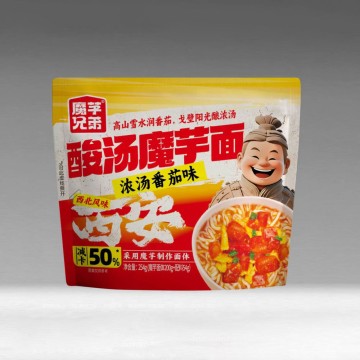
In the ready-to-eat (RTE) retail sphere, the emergence of "hybrid staple foods"—wherein konjac hydrocolloids are blended with high-protein legumes, highland barley, or resistant starches—demonstrates tremendous commercial success. Blended formulations allow food brands to achieve optimal tensile bite, al-dente masticability, and sauce-clinging capability, transforming a historically plain commodity into gourmet, globally compliant dietary fiber delivery solutions.
Pioneering de-odorization technology, thermal resilience, and clean-label manufacturing compliant with global FDA, EFSA, and Halal specifications.
Historically, the primary consumer barrier to wider adoption of konjac-based vermicelli centered around its organoleptic properties: specifically, the lingering fishy, alkaline aroma resulting from traditional calcium hydroxide (Ca(OH)₂) coagulation, paired with a distinct, overly rubbery snap. Over the past five years, collaborative research between food bioengineers and manufacturing leaders has completely revolutionized this extraction and curing matrix.
Through patented alcohol-precipitation washing cycles, the naturally occurring trimethylamine compounds and unreacted alkaline residues are thoroughly extracted from the purified konjac flour before extrusion. Subsequent curing leverages micro-dosed food-grade calcium carbonates and gentle thermal cycling, yielding a clean, neutral-odor vermicelli that readily absorbs culinary broths, sauces, and spice emulsions.
Furthermore, retort pouch packaging technology preserves the product in liquid suspension without requiring synthetic chemical preservatives, delivering ambient shelf-life stability of 18 to 24 months. This makes konjac vermicelli uniquely suited for international export logistics, disaster relief nutritional rations, and high-efficiency FMCG retail distribution networks.
Full-chain contract manufacturing, precision formulation design, international trade facilitation, and strategic brand positioning for functional dietary food brands.