86+09153618258
Leave Your Message
-
Contact Phone
-
 Contact Email
The global food landscape is undergoing a monumental paradigm shift. As consumers become increasingly health-conscious, the demand for sustainable, plant-based, and low-calorie alternatives has skyrocketed. Vegetarian snack brands are no longer catering to a niche audience; they are at the forefront of a multi-billion dollar dietary revolution. Amidst this transformation, one ancient ingredient has been resurrected and refined by modern food technology: Konjac.
Derived from the Amorphophallus konjac plant native to East Asia, konjac has been consumed for centuries. However, its recent explosion in the global market is driven by its unique nutritional profile. Composed primarily of glucomannan, a water-soluble dietary fiber, konjac noodles offer a near-zero calorie, ultra-low carbohydrate, and completely vegan foundation for modern snacking. For vegetarian snack brands, Low-Calorie Konjac Noodles represent the ultimate blank canvas—a highly versatile, texturally satisfying ingredient that flawlessly absorbs complex vegan flavor profiles without adding unwanted caloric density.
The integration of konjac into the vegetarian snack sector is not merely a passing trend; it is a structural evolution in how we approach satiety and nutrition. Brands are now leveraging advanced manufacturing processes to create ready-to-eat konjac cups, chewy crisps, and semi-finished meal kits that rival traditional wheat or rice-based products in taste, but vastly outperform them in health metrics.
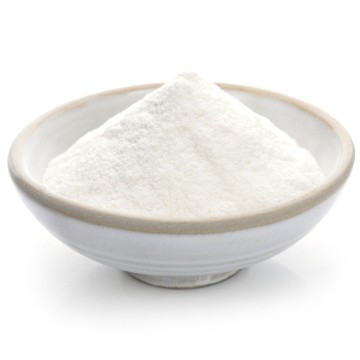
Understanding the industrial status of konjac is crucial for any vegetarian snack brand looking to scale. The epicenter of global konjac production lies in China, where favorable agricultural conditions and decades of technological investment have created a robust, highly efficient supply chain. Today's top-tier China suppliers and factories utilize sophisticated extraction techniques to produce premium glucomannan powder, ensuring maximum purity and optimal viscosity.
The industrial processing of konjac has evolved significantly. Historically, konjac products were notorious for a slight "fishy" odor—a natural byproduct of the calcium hydroxide used in traditional coagulation. However, modern factories now employ AI-monitored purification and deodorization technologies. This industrial leap means that the konjac noodle blanks and raw flours supplied today are completely odorless and neutral in taste, making them perfectly suited for delicate vegetarian seasonings like mushroom umami, spicy chili oil, or tangy tomato bases.
Furthermore, the factory-direct model has democratized access to this superfood. By partnering directly with Chinese manufacturers, international vegetarian brands can bypass middlemen, securing factory prices for customized packaging and bulk raw materials. This cost-efficiency is vital for maintaining competitive retail pricing in the crowded healthy snack market.
To truly appreciate the value of low-calorie konjac noodles, one must delve into the nutritional science of its core component: Glucomannan. Unlike digestible carbohydrates that cause rapid spikes in blood glucose, glucomannan is a highly viscous soluble fiber. When consumed, it absorbs up to 50 times its weight in water, forming a gel-like substance in the digestive tract.
For vegetarian snack brands, this physiological mechanism is a marketing goldmine. Products formulated with premium konjac flour promote a profound sense of satiety (fullness) while delivering negligible calories. This makes konjac an unparalleled ingredient for:
Additionally, the attainment of global certifications such as HALAL, Kosher, ISO, and FDA registrations by top Chinese konjac factories ensures that vegetarian brands can seamlessly introduce these products into diverse international markets, respecting both dietary choices and religious dietary laws.
The versatility of konjac extends far beyond the traditional wet noodle pouch. Innovative manufacturing has birthed a variety of form factors that cater to distinct consumer scenarios. Here is a deep dive into how vegetarian snack brands are utilizing these formats:
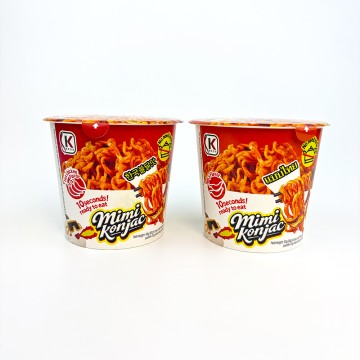
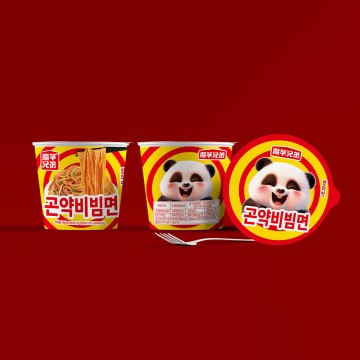
Time-poor consumers crave convenience without compromising their health goals. The 90g Konjac Noodles Cup is revolutionizing the instant ramen aisle. By utilizing plant-based flavorings—such as vegetarian "Spicy & Hot Chicken" flavors crafted from yeast extracts and tailored spice blends—brands can offer a fiery, satisfying meal under 50 calories. The microwavable or hot-water-ready cup format is perfect for office lunches or late-night study sessions.
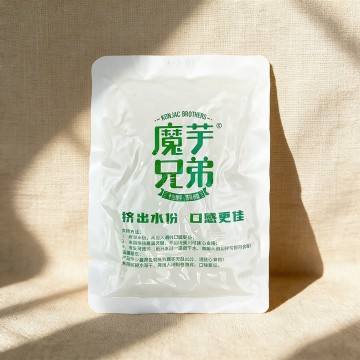
The rise of home cooking and meal-prep kits has created a massive market for semi-finished ingredients. Konjac Noodle Blanks (200g per bag) provide the perfect keto-friendly, low-calorie base for consumer creativity. Vegetarian brands can package these blanks alongside proprietary vegan sauces (e.g., vegan pad thai sauce, sesame peanut dressing), allowing the consumer to assemble a gourmet, macro-friendly meal in minutes.
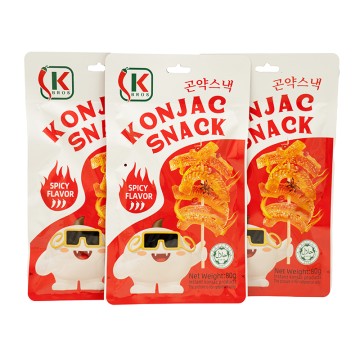
Snacking is fundamentally about texture. Traditional potato chips are calorie-dense and high in unhealthy fats. Enter the 80g Konjac Snack - Chewy Crisps. Through advanced dehydration and flavor-infusion techniques, konjac is transformed into a chewy, savory snack reminiscent of jerky or seasoned squid, but 100% plant-based. With HALAL certification, these snacks are penetrating markets in Southeast Asia and the Middle East at an unprecedented rate.
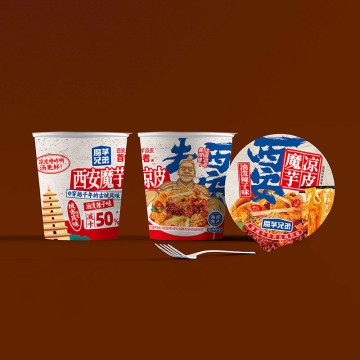
Consumers are increasingly seeking authentic, regional flavors. The 200g/220g Barrel-Style Xi'an Konjac Cold Noodles tap into the trend of global street food. By replicating the chewy texture of traditional Xi'an cold noodles (Liangpi) using low-calorie konjac, vegetarian brands can offer a culturally rich culinary experience that aligns with modern dietary restrictions.
As we look to the future, the intersection of AI, food technology, and sustainability is set to redefine the konjac industry. For vegetarian snack brands, staying ahead of these trends is critical for long-term market dominance.
AI-Driven Flavor Profiling: Artificial Intelligence is now being used to analyze vast datasets of consumer flavor preferences. Since konjac is inherently flavorless, AI algorithms help food scientists develop hyper-targeted vegetarian seasoning blends that perfectly coat the noodles, maximizing flavor release and mouthfeel while minimizing sodium and artificial additives.
Hybrid Nutritional Formulations: The next generation of konjac noodles will not be made of glucomannan alone. We are seeing a trend towards hybrid konjac products, where premium konjac flour is co-extruded with oat fiber, spinach powder, or soybean protein. This not only enhances the texture—making it indistinguishable from traditional wheat pasta—but also boosts the protein and micronutrient profile, making it a complete nutritional powerhouse for vegans.
Sustainable and Clean Label Manufacturing: Consumers demand transparency. The future of konjac manufacturing relies on eco-friendly processes, such as closed-loop water recycling systems in factories and biodegradable, plant-based packaging for noodle cups. Furthermore, the "Clean Label" movement ensures that ingredients lists remain short, recognizable, and free from synthetic preservatives.
To help vegetarian and plant-based brands capitalize on the konjac revolution, we provide a comprehensive suite of enterprise-level services designed to streamline your journey from concept to global distribution.
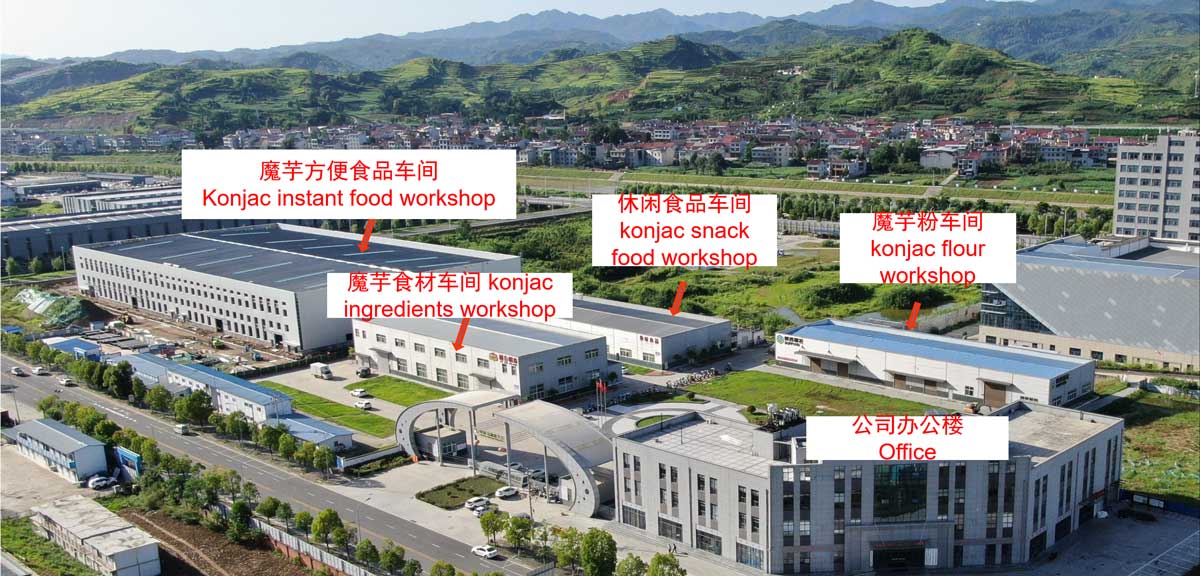



The trajectory of the snack industry is clear: consumers will no longer accept a compromise between taste and health. Low-calorie konjac noodles offer an unprecedented opportunity for vegetarian snack brands to capture a highly lucrative, rapidly expanding market segment. By leveraging premium raw materials, cutting-edge manufacturing processes, and comprehensive OEM/ODM partnerships, your brand can deliver the ultimate guilt-free culinary experience.
Whether you are looking to source the finest pure glucomannan powder, develop a custom line of spicy instant noodle cups, or innovate with new chewy konjac snack formats, the foundation of your success lies in choosing the right manufacturing partner. Embrace the future of food technology and elevate your vegetarian brand to global prominence today.